





Dr. Saniya Habboub: Life, Education, Medical Career and Legacy
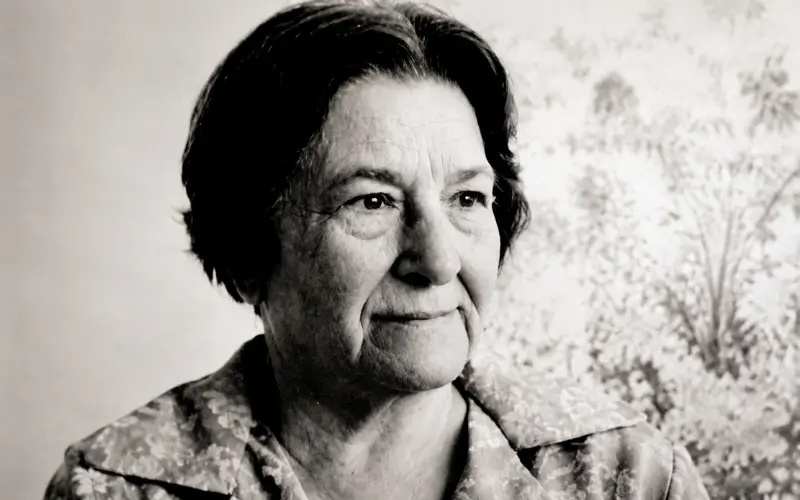
Who Was Dr. Saniya Habboub?
Dr. Saniya Habboub was a pioneering Lebanese physician and one of the first Lebanese women to study abroad. She was born in Beirut in 1901 and studied medicine at a time when women had great difficulties in pursuing a medical education. She eventually made her way to the United States and in 1931 graduated with a medical degree before moving back to Beirut, where she opened a medical practice.
Her journey is more than just becoming a doctor. It is also the theme of education, independence, and service. She then went back to Lebanon to treat women in the community, including those who would not have been able to get medical treatment. She was also active in the field of humanitarian and community organisations, and was one of the founders of the Lebanese Red Cross.
Her work was later recognised internationally ten years later, with Google dedicating a Doodle to her on June 10, 2022, the anniversary of her medical qualification.
Early Life in Beirut
Saniya Moustafa Habboub was born in Beirut in 1901, in a family that was well-educated. She had leather business as her father Mustapha Habboub was a leather merchant who built a leather business. She had a Turkish mother, Adila Al-Jazairy, who had no formal education. Her mother was adamant that her daughter should be educated, however.
This family environment played an important role in Saniya future.
She studied in spite of the social attitudes of her parents, which were not always conducive to the study of women.
She was born and raised in a literate family, as her father was a host for scholars and other prominent people, according to the Lebanese American University. She received her schooling from the American School for Girls. This encouragement from her family was especially significant when she chose to study medicine in another country, outside of Lebanon.
Her Childhood and Health Challenges
Her childhood was far from trouble-free.
Saniya was quite unwell at the age of 14, when she picked up typhoid fever. She was in bed for a month or so, and eventually suffered from phlebitis in her left leg as a result of the sickness, according to the Lebanese American University’s historical account. This caused her to be unable to walk the rest of her life. She never gave up on her schooling, however. Her commitment to further education was a major part of her life.
Her First Marriage
Saniya’s husband was a doctor who was from her neighbourhood, and they were married when Saniya was 16 years old.
She then went to Damascus with him and lived there for about two years, but the marriage failed, and they divorced. The Lebanese American University states the couple became good friends following their time together.
She went back to Beirut, where she continued her studies.
This was significant as she was still seeking higher education opportunities at a time when it was not common for women to pursue higher education.
Education at the American Junior College for Women
Saniya joined the inaugural freshman class of the American Junior College for Women (AJCW) in 1924. She was one of the first three students to graduate from the College’s first graduating class in 1926. She is among Munira Barbir and Armanouhi Mugrditchian in the historic graduating class of 1926 at the Lebanese American University. After completing her studies there, she continued at the American University of Beirut (AUB) with the intention of studying medicine.
But at that time, women were not welcome into the medical programme as she had imagined. She also began to feel the social opposition growing.
Social Barriers to Studying Medicine
It was unusual for a woman in her community at that time to want to become a doctor. According to the Lebanese American University records, some people strongly opposed her pursuing medicine and even berated her family for letting her go on with her education. Saniya nevertheless continued.
She had already decided to go into medicine. Her resolve was increased when she learned about one of those physicians from Damascus who went to the U.S. to study medicine and then came back home to practice. That tale inspired her to believe that she could study medicine overseas.
Journey to the United States
Saniya took the big step in 1926 to come to the United States for medical studies.
She departed Lebanon on 11 August 1926, via ship, for New York. It was an unusual trip because she didn’t have her immediate family with her. Her parents were, however, in favour of the plan and assisted in organizing the trip.
The trip was the first of an entire education that was to be the most crucial in her medical career. She was to attend medical school in the United States, where few females from the area pursued this career.
Medical Education in the United States
Saniya graduated from medical school in 1931. According to the official biography on Google, she was among the first women doctors to study medicine abroad, and she was awarded her medical degree in gynecology and obstetrics from the Women Medical College in Pennsylvania.
Her medical degree was awarded in 1931 at Lebanese American University, where she then received specialized training in obstetrics, according to a more detailed history. Her accomplishment was not only a success in her career, but a triumph for her as a woman.
According to the Lebanese American University, she became the first Lebanese woman to get her medical degree in America. In the biographical accounts from the time, she was also said to be the “only Arab student to have graduated from the Women’s Medical College of Pennsylvania.
Graduation in 1931
She graduated June 10, 1931. It has also been significant to her legacy in public visibility, as Google chose June 10, 2022, to honor her life and medical feat in its Doodle that day.
It was also a special occasion in the medical college for her graduation. Google says the school asked Lebanese historian and Princeton professor Philip K. Hitti to speak at the graduation ceremony to honor her accomplishment. The achievement showed how far she had come from the limitations that she had previously encountered in her schooling.
Scholarship for Future Students
It wasn’t as if Saniya just finished her schooling and left it behind. She thanked the institution for granting her the opportunity to study and established a scholarship for future students in her name. Google registers this as one of her legacies. It was in keeping with her general conviction on education. Her own personal experience had taught her the transformative power of education on women’s opportunities.
Thus the scholarship was a way to pass on some of her accomplishments to future generations.
Return to Beirut
Upon graduation from medical school, Saniya moved back to Lebanon. Google official biography suggests she returned to Beirut in 1933, opening her own medical practice in the Bab Idriss neighbourhood. Her return was important, not only for it being her own practice, but because she was returning.
She wanted to make a career for herself.
It might be challenging for a female to work as a doctor on their own at the time. She rejected the notion that she should work only with a male physician and opened her own office doing both obstetrics and general medicine, according to the Lebanese American University.
Her Medical Practice in Bab Idriss
She had her clinic in Bab Idriss, Beirut.
At first, she was thought of by some of the patients as a midwife, not a qualified doctor. However, with time, she was able to garner the trust of the community through her medical practice.
Her specialty was women and general medicine. She also treated women who were too poor for the services of a physician. This was a blend of her professional medical practice and her commitment to community service that entered into the core of her practice.
Free Medical Care for Women
Her greatest contribution was to women of modest means. According to the Lebanese American University, she volunteered to treat poor women for free for 50 years, and she also visited their homes. This was because her work extended beyond the walls of her clinic.
She treated patients in situations where access to professional health care may be challenging. Her work helped to establish trust in women doctors and showcase the fact that women could build a successful career in their professions and serve their communities.
Her Work with the Lebanese Red Cross
Saniya also participated in humanitarian activities. According to the Lebanese American University, she was one of the founders of the Lebanese Red Cross.
She was working in the public-service side of her career as part of her work with the organisation. Medicine was not limited to private practice for her. She was also involved with community groups which helped the less fortunate and advocated for social welfare.
Community and Social Work
Her community service activities were not limited to the Red Cross. She belonged to the Muslim Orphanage and Young Women Muslim Association. She was also a member of the board of Maqassed Hospital.
These positions indicate that she was not only a private doctor but a professional one as well. She entered into the fields of health care and education, humanitarian work, and community service.
Her work also helped to establish a model for women wanting to enter into professional and public life.
Marriage to Muhammad Al-Naqqash
In 1937, Saniya wed Muhammad al-Naqqash, a journalist who had interviewed her since her fame came in his medical work.
They had two daughters. She had a family life as well as her medical practice. She was a long-time member of the medical profession, serving her patients and doing community work for many years.
Fifty Years of Medical Service
Saniya’s professional career spanned about 50 years. In this period, she gained a reputation as a physician who was also involved in the community. She treated women free of charge, did home visits, and was active in humanitarian and social organizations.
One aspect of her career that is especially interesting is its span of time, as she started medicine at a time when opportunities for women were much more limited than they are now.
Her ongoing efforts helped to prove that women can be productive in the long-term in medicine and in public affairs.
Health Medal of Merit
In 1982, she was rewarded for her contribution to medicine by the Lebanese government.
She was awarded the Health Medal of Merit for 50 years’ service.
The award was given at a late age and for decades of medical and community service.
It remains to be one of the most significant official honors that she got during her career.
Death in 1983
Saniya passed away in September of 1983 at age 82.
She passed away in her home just a year after being awarded the Health Medal of Merit.
Her story was not seen by many people in her lifetime, but she was remembered through education, historical and public works.
Street Named in Her Memory
One street in Ramlet al-Baida, Beirut, was named in her honor.
The street is a physical tribute to her contributions to medicine and public life.
Her association with Beirut is significant since it was where she was born, educated, and set up her medical practice.
Google Doodle Recognition
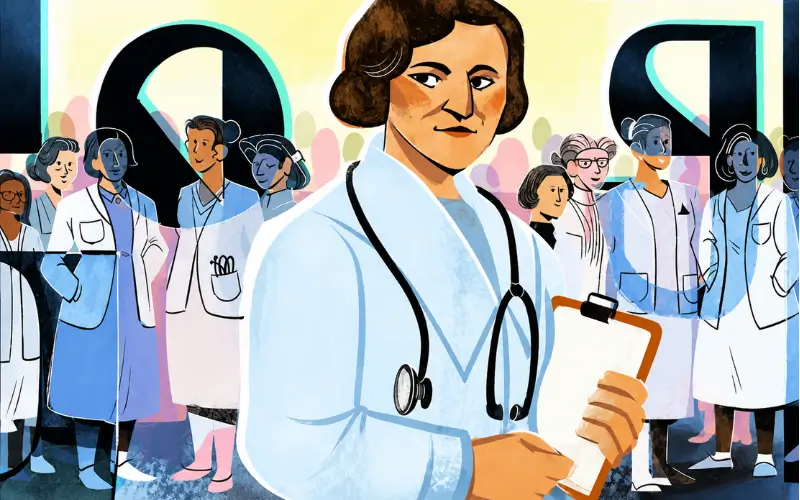
Her legacy was finally recognised in 2022, with one of the largest recognitions of her legacy being in 2022.
Google released a Doodle on her life and medical career on June 10, 2022. It was selected to mark the anniversary of her graduation from medical school in 1931.
Google called her a medical pioneer, and she was one of the first female doctors to study medicine in an overseas country for the first time in Lebanon.
The Doodle also brought attention to her work after returning to Beirut, her medical practice, and her humanitarian activities.
This recognition catapulted her story into the wider international sphere.
Why Her Story Matters Today
Her role in life doesn’t just stop with being a doctor.
Her career reflects several significant shifts in the world of women education and work in the Arab region. She was opposed to her children attending higher education, was an unusual woman to travel overseas (at a time when such was not the norm for women from her background), and after completing her medical training, returned home to set up her own practice.
She then worked for many years in medical practice and community service. Her story serves as an example of how education can lead to opportunities when social expectations are likely to hinder them.
Her Influence on Women in Medicine
Her example broke the ‘males only’ rule of medicine.
Upon her return to Beirut, women entry into professional medicine was still rare. Her success proved to the world that a woman could gain patients’ confidence and build a successful medical career.
Her impact was therefore beyond the treatment of her patients.
She set a precedent for generations of women wishing to attend higher education and have job opportunities. Google also spoke about this part of her legacy; she was an inspirational figure who helped pave the way for future generations of women.
Education as Her Central Message
Her education continued to be one of the most powerful themes in her life. Her parents were supportive of her education despite the disapproval of society. She went overseas to get the medical education she didn’t have the way she wanted it.
Upon finishing this education, she set up a scholarship for future students. So her life became intertwined with education in various ways: getting it, getting it when others had trouble, and helping others to get it.
Was She a Doctor in the UAE?
No, not a physician from the UAE, it was actually Dr. Saniya Habboub from Lebanon. Born in Beirut, she studied there and in the USA, and her medical practice was inaugurated upon her return from studies in Beirut.
This distinction is significant because some websites nowadays have the keyword with geographic qualifiers associated with audiences seeking the Gulf. That is not going to affect her historical identity or setting for medical practice. If she’s to be described as an accurate historic figure, she should be called a Lebanese medical pioneer.
Why Is She Still Searched Today?
Her name came into the limelight again in 2022 when Google honoured her with a Doodle. The Doodle marked her graduation, her medical studies in the U.S., her return to Beirut, and her many years of service. Her story is also current, as it is linked to women education and professional independence, and medicine.
Her life is of historical significance for readers interested in the history of pioneers among Arab women doctors.
Conclusion
A pioneering Lebanese physician of medical education, independence, and community service, Dr. Saniya Habboub’s life was a blend of these things. She went from her early education in Beirut to studying medicine in the United States, and worked in Bab Idriss, waging the battle against opportunities denied to women of her era.
Her 50 years of medical service, free treatment for underprivileged women, humanitarian activities, and the Lebanese Red Cross left a lasting legacy. She was awarded the Lebanese government’s Health Medal of Merit in 1982, just before she died in 1983.
In 2022, the Google Doodle was dedicated to her, giving her a new generation of readers. Today, her memory is kept in the form of a pioneer woman physician in Lebanon and also as a symbol of how social barriers can be broken through education and determination, enabling future generations.
Frequently Asked Questions
Who was Dr. Saniya Habboub?
She was a trailblazer in the medical profession in Lebanon, where she studied medicine in the United States and served as a physician in Beirut.
When was she born?
Born in Beirut in 1901.
Where did she study medicine?
She attended medical school in the USA and earned her medical degree in 1931.
What was her medical speciality?
She trained in medicine (gynecology and obstetrics) and also did some work in general medicine.
Where did she practise?
On her return from the United States, she opened her medical practice in Bab Idriss, Beirut.
Did she work with the Lebanese Red Cross?
Yes. She is one of the founding members of the Lebanese Red Cross.
Why did Google honour her?
Google created a Doodle to celebrate her graduation from medical school in 1931 and her role in medicine and women’s education on June 10, 2022.